Hsving decided I do indeed want to get back into tea blogging, I have likewise decided that the best place to do so is over with the good people of TeaTrade. Henceforth all tea-related posts can be found at http://joiedetea.teatra.de - I'd love it if you followed me over there (and checked out the other wonderful tea blogs and discussion and marketplace to be found on the site), but no hard feelings if not.
Thanks for coming along thus far and I hope to see you on TeaTrade!
Tuesday, 22 November 2011


Saturday, 19 November 2011
The taste of failure...
...is unbelievably bitter, astringent and, on an empty stomach, head-spinning. Yes, that is what the failure to brew a cup of sencha PROPERLY tastes like.
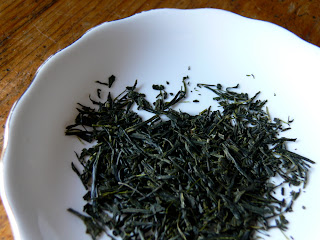
Not just any sencha either, dammit. A Darjeeling sencha from Badamtam estate, very kindly sent to me by the lovely people at Lochan Tea. I've never had a Darjeeling sencha before. It looks very like a deep steamed Japanese one, dark green leaves like fine needles. So naturally I brewed in the way I normally brew sencha these days... A tablespoon of leaves, boiling water, multiple short steeps.
Well. This method works beautifully for Japanese greens, and really pulls the most out of Australian sencha too... But it was an absolutely abject failure for the Badamtam. I haven't had such an appallingly bitter cup of tea in a while, especially not one I've made myself.* So I shall try again; less leaf, cooler temperatures... Hopefully I'll be able to work it out before I use up all my sample.
I still drank the tea, though, undrinkable though it seemed on first sip. Self-flagellation? Well, maybe a little, but once I'd got past the grimace-inducing taste of the alkaloids, that same astounding sweetness that sencha has was still there. So it was worth it, in the end.
*a notable example at another establishment was a pot of Earl Grey at Trunk; I cannot even begin to imagine what they did to it to make it so vile. I suspect a ritual circle of black magic, worked by coffee-drinking tea-haters, may have been involved.
Not just any sencha either, dammit. A Darjeeling sencha from Badamtam estate, very kindly sent to me by the lovely people at Lochan Tea. I've never had a Darjeeling sencha before. It looks very like a deep steamed Japanese one, dark green leaves like fine needles. So naturally I brewed in the way I normally brew sencha these days... A tablespoon of leaves, boiling water, multiple short steeps.
Well. This method works beautifully for Japanese greens, and really pulls the most out of Australian sencha too... But it was an absolutely abject failure for the Badamtam. I haven't had such an appallingly bitter cup of tea in a while, especially not one I've made myself.* So I shall try again; less leaf, cooler temperatures... Hopefully I'll be able to work it out before I use up all my sample.
I still drank the tea, though, undrinkable though it seemed on first sip. Self-flagellation? Well, maybe a little, but once I'd got past the grimace-inducing taste of the alkaloids, that same astounding sweetness that sencha has was still there. So it was worth it, in the end.
*a notable example at another establishment was a pot of Earl Grey at Trunk; I cannot even begin to imagine what they did to it to make it so vile. I suspect a ritual circle of black magic, worked by coffee-drinking tea-haters, may have been involved.
Tuesday, 12 April 2011
Jamira Estate Assam
I have a tendency to desperately crave teas I don't keep on hand very often, usually of the rich Irish Breakfast or strong (but complex) Assam variety.
I found one in an unlikely spot, on holiday a couple of weeks ago - we were staying in Apollo Bay but made a day trip to Lorne where we stopped in at the River Tea House for lunch. I ordered a pot of the Jamira Estate Assam and it was so good I bought a packet to bring home. I should, in fact, have bought two or three because I have gone through nearly 100g of it in just over two weeks (with a bit of help from Tennant).
It is fruity, extremely puckery if oversteeped, malty and strong and sweet in the aftertaste, with a powerful wake up kick. I love it. It does tend to need milk to smooth it out but hey - in this autumn weather that's just the kind of tea I like. I'm having trouble going for green tea at the moment; although I usually enjoy it once it's made, I can't enthuse myself about it quite as much as I can in the warmer weather.
A google search for 'jamira estate assam' does not bring up any particularly detailed or indeed cheerful information about the estate. Workers' deaths and a cholera outbreak (it's not clear how recent). A depressing reminder that the tea that I enjoy so much does come with a lot of hidden costs.
I found one in an unlikely spot, on holiday a couple of weeks ago - we were staying in Apollo Bay but made a day trip to Lorne where we stopped in at the River Tea House for lunch. I ordered a pot of the Jamira Estate Assam and it was so good I bought a packet to bring home. I should, in fact, have bought two or three because I have gone through nearly 100g of it in just over two weeks (with a bit of help from Tennant).
It is fruity, extremely puckery if oversteeped, malty and strong and sweet in the aftertaste, with a powerful wake up kick. I love it. It does tend to need milk to smooth it out but hey - in this autumn weather that's just the kind of tea I like. I'm having trouble going for green tea at the moment; although I usually enjoy it once it's made, I can't enthuse myself about it quite as much as I can in the warmer weather.
A google search for 'jamira estate assam' does not bring up any particularly detailed or indeed cheerful information about the estate. Workers' deaths and a cholera outbreak (it's not clear how recent). A depressing reminder that the tea that I enjoy so much does come with a lot of hidden costs.
Monday, 11 April 2011
Stressful day
Perhaps a tea of fresh mint from the garden might make me feel a bit better...?
Well, a pretty picture does, anyway.

Hope you are having a more relaxing day than me. If not, surely a cup of tea will help. Go make one now.
Well, a pretty picture does, anyway.

Hope you are having a more relaxing day than me. If not, surely a cup of tea will help. Go make one now.
Sunday, 20 March 2011
Taking tea outdoors


I took advantage of the sunny weather and an hour to myself this morning to take my tea outdoors in the Fitzroy Gardens. Just lovely.
Tuesday, 15 March 2011
So... What would YOU call it?
Just following on from my previous post about Australian green tea, and whether it should be called sencha or not - Jackie, for example, seems to feel NOT - but what more exciting name than just 'Australian green tea' could be used instead?
For example: Oolong tea grown in New Zealand is called Zealong... Apparently the tea is very good but I am afraid the name doesn't really work for me; it just sounds kind of silly.
Moreover, what if there were more than one kind of tea being produced? For example, green tea grown in Australia but processed as for longjing, chun mee, bi luo chun? Clearly just calling the whole lot 'Australian green tea' wouldn't cut it - you would need to differentiate somehow. Would 'Australian XYZ-style tea' be adequate? I am a bit less sure now than I was when I wrote the previous post.
What do you think?
For example: Oolong tea grown in New Zealand is called Zealong... Apparently the tea is very good but I am afraid the name doesn't really work for me; it just sounds kind of silly.
Moreover, what if there were more than one kind of tea being produced? For example, green tea grown in Australia but processed as for longjing, chun mee, bi luo chun? Clearly just calling the whole lot 'Australian green tea' wouldn't cut it - you would need to differentiate somehow. Would 'Australian XYZ-style tea' be adequate? I am a bit less sure now than I was when I wrote the previous post.
What do you think?
Saturday, 12 March 2011
Green tea from the Alpine Tea Co
Did you know that green tea is grown in Victoria, Australia? Yes indeedy, right in the Victorian Alps - Tawonga to be precise. The tea bushes at The Alpine Tea Co are the 'yabukita' strain, which is one of the most popular for sencha in Japan, and the leaves are processed as for sencha.*
I came across the company at the Collingwood Children's Farm farmers' market a few months ago and purchased some of their first (spring) harvest tea. I haven't tried the regular green tea yet, but I have been greatly enjoying the first harvest one (in fact am nearly out of it).
Sometimes I brew a smaller amount of leaf with low-temperature water, for about 2 minutes at a time (2-3 infusions), sometimes with lots of leaf for very short infusions (30 secs or so) in boiling water. Either way it is delicious. There are unique flavours that I haven't come across in a Japanese sencha. The taste profile is similar - the roasty, savoury taste for example - but there are also at times fruity notes, even floral ones, and sometimes an extremely distinct smell & taste that I can only describe as 'fresh dairy cream'. In some ways this tea makes me think more of an oolong than a sencha. I guess this is the effect of terroir at work.
The Alpine Tea Co teas are very reasonably priced too, and I am thinking that at $50-$65 a kilo a substantial purchase might not go amiss... especially at the rate I have been drinking sencha lately.
Interestingly, the company states on their website that
*I expect (though this is speculation on my part) that this production decision was at least partly influenced by the fact that sencha processing is almost entirely mechanised, from harvest to finish - given the high cost of labour in Australia, I imagine that a hand-plucked and processed tea would be beyond exorbitant in price.
I came across the company at the Collingwood Children's Farm farmers' market a few months ago and purchased some of their first (spring) harvest tea. I haven't tried the regular green tea yet, but I have been greatly enjoying the first harvest one (in fact am nearly out of it).

Sometimes I brew a smaller amount of leaf with low-temperature water, for about 2 minutes at a time (2-3 infusions), sometimes with lots of leaf for very short infusions (30 secs or so) in boiling water. Either way it is delicious. There are unique flavours that I haven't come across in a Japanese sencha. The taste profile is similar - the roasty, savoury taste for example - but there are also at times fruity notes, even floral ones, and sometimes an extremely distinct smell & taste that I can only describe as 'fresh dairy cream'. In some ways this tea makes me think more of an oolong than a sencha. I guess this is the effect of terroir at work.
The Alpine Tea Co teas are very reasonably priced too, and I am thinking that at $50-$65 a kilo a substantial purchase might not go amiss... especially at the rate I have been drinking sencha lately.
Interestingly, the company states on their website that
to ensure no direct comparison to Japanese Sencha (ours is not as strong), we prefer to call it Australian Green Tea.What do you think about that? I know that green tea grown in China and processed as for sencha is sold labelled as such - I believe that this is because the Japanese tea industry alone simply can't meet the full market demand for sencha. I think that so long as it is also labelled with its country of origin and not purported to be Japanese that there is no harm in calling it 'sencha' as well, or 'sencha-style' - and that this even opens up the opportunity for people to celebrate more diverse flavours and taste profiles.
*I expect (though this is speculation on my part) that this production decision was at least partly influenced by the fact that sencha processing is almost entirely mechanised, from harvest to finish - given the high cost of labour in Australia, I imagine that a hand-plucked and processed tea would be beyond exorbitant in price.
Tuesday, 8 March 2011
Jinxed
I am having a teaware run of death at the moment. Over the last four months or so I have
Broken two glass teapot lids (the second one was my spare, my glass teapot is now unusable)
Shattered a gaiwan lid (luckily I have a spare)
Broken the handle on my beautiful Royal Doulton cup (mended)
Shattered the lid of my tokoname teapot (not fixable, teapot now can't be used)
Smashed the handle of my small zero japan teapot (well, the cat knocked it off the bench; can't be fixed)
Smashed to smithereens a lovely green mug that was a gift from my husband.
The green mug died last night. I went to bed in tears. I have not allowed myself any tea so far today in case I break something else...
Broken two glass teapot lids (the second one was my spare, my glass teapot is now unusable)
Shattered a gaiwan lid (luckily I have a spare)
Broken the handle on my beautiful Royal Doulton cup (mended)
Shattered the lid of my tokoname teapot (not fixable, teapot now can't be used)
Smashed the handle of my small zero japan teapot (well, the cat knocked it off the bench; can't be fixed)
Smashed to smithereens a lovely green mug that was a gift from my husband.
The green mug died last night. I went to bed in tears. I have not allowed myself any tea so far today in case I break something else...
Tuesday, 1 March 2011
Tea and Food: A match made in heaven
Peaches and almonds go together so beautifully. Not surprising really I suppose, when you consider they are closely related within the same botanical family.

I think many teas pair well with fruit and nuts as a snack, but my particular favorite is a sencha. I love the way the initial bitterness of the tea contrasts with the sweetness of the fruit and creaminess of the nuts, and then the sweetness comes through again at the end.
I have just used up the last of my sencha of the spring sun from Obubu Tea. I love this tea. I make it the way they recommend, with lots of leaf and boiling water for multiple VERY short steeps. This brings out the bitterness that I love in a Japanese tea in the first infusion; subsequent cups are sweet and creamy, a little floral. It cold-brews beautifully too.
I'll be purchasing some more of this delicious tea as soon as I can.
If you'd like to know more about Obubu, have a look at this great interview with Matsu and Akky , the farmers, on the Travel and Tea blog!
PS do you like my incredibly beautiful Royal Doulton 'moss rose' teacup set? I love it SO MUCH!

I think many teas pair well with fruit and nuts as a snack, but my particular favorite is a sencha. I love the way the initial bitterness of the tea contrasts with the sweetness of the fruit and creaminess of the nuts, and then the sweetness comes through again at the end.
I have just used up the last of my sencha of the spring sun from Obubu Tea. I love this tea. I make it the way they recommend, with lots of leaf and boiling water for multiple VERY short steeps. This brings out the bitterness that I love in a Japanese tea in the first infusion; subsequent cups are sweet and creamy, a little floral. It cold-brews beautifully too.
I'll be purchasing some more of this delicious tea as soon as I can.
If you'd like to know more about Obubu, have a look at this great interview with Matsu and Akky , the farmers, on the Travel and Tea blog!
PS do you like my incredibly beautiful Royal Doulton 'moss rose' teacup set? I love it SO MUCH!
Friday, 25 February 2011
My proudest moment
Last Sunday Tennant Pippin and I went over to my sister's new place to check it out for the first time. Naturally my lovely sister brewed me up a pot of tea (T2 Creme Brulee, tres nice).
Pippin was chattering away and I wasn't paying much attention, but then I heard Tennant say, 'Hey guess what? Pippin just said "TEA"!'
And it was true. Pippin was pointing at my mug and saying, as clearly as he could, 'TEA!'*
I was So. Proud. I almost cried.
Then, this morning (yes, it gets better!!) we were all just about to head downstairs for breakfast and I said 'I'll put the kettle on.'
Pippin immediately said 'TEA!'
We tried to get him to say it again: 'Pippin, what happens when mummy puts the kettle on?' - but all he would do was giggle and say 'Yay!' Also an entirely correct response, I would note.
He is a boy after my own heart. Oh, I am so proud.
Here he is having a teaspoonful or so of some cooled Giddapahar autumn flush after his breakfast:

*it comes out more like 'K-HEE!' (he is not super good at 't' words yet) but it is entirely clear what he means. I am not wishfully thinking this.
Pippin was chattering away and I wasn't paying much attention, but then I heard Tennant say, 'Hey guess what? Pippin just said "TEA"!'
And it was true. Pippin was pointing at my mug and saying, as clearly as he could, 'TEA!'*
I was So. Proud. I almost cried.
Then, this morning (yes, it gets better!!) we were all just about to head downstairs for breakfast and I said 'I'll put the kettle on.'
Pippin immediately said 'TEA!'
We tried to get him to say it again: 'Pippin, what happens when mummy puts the kettle on?' - but all he would do was giggle and say 'Yay!' Also an entirely correct response, I would note.
He is a boy after my own heart. Oh, I am so proud.
Here he is having a teaspoonful or so of some cooled Giddapahar autumn flush after his breakfast:

*it comes out more like 'K-HEE!' (he is not super good at 't' words yet) but it is entirely clear what he means. I am not wishfully thinking this.
Tuesday, 22 February 2011
Tea tasting comparison FAIL
Well, of all the brain dead things to do... I set up a little taste comparison between two 2009 Autumn Flush Darjeeling teas which I picked up inexpensively late last year from Thunderbolt Tea - one from Sungma Estate and one from Giddapahar. I've been drinking quite a bit of the Sungma on a daily basis but I wanted to compare it with the other.
So I set it all up, two teapots, two mugs (colour coordinated with the teapots if you please, although that was more by happenstance than design), warmed them all up, weighed the leaf (2g of each), steeped, poured... And then I couldn't remember which leaves I put in which pot.
FAIL!
The green mug brew was spicier, lighter; the blue mug brew was a bit thicker, darker tasting and slightly sweeter & more musky - so I think that one may have been the Giddapahar and the green mug the Sungma. I'm not sure though. at least they were both delicious.
I guess if at first you don't succeed...
So I set it all up, two teapots, two mugs (colour coordinated with the teapots if you please, although that was more by happenstance than design), warmed them all up, weighed the leaf (2g of each), steeped, poured... And then I couldn't remember which leaves I put in which pot.
FAIL!
The green mug brew was spicier, lighter; the blue mug brew was a bit thicker, darker tasting and slightly sweeter & more musky - so I think that one may have been the Giddapahar and the green mug the Sungma. I'm not sure though. at least they were both delicious.
I guess if at first you don't succeed...
Tuesday, 15 February 2011
A couple of things
I've had a couple of interesting comments posted lately and I wanted to respond to them where more people may see the reply.
Alex commented on my post about What's a letter worth? :
Re: the first point he makes: I agree, I often prefer the more robust-flavoured teas myself (although I do enjoy a first flush Darjeeling). Sometimes I feel a bit bad about this: does it mean I am actually not as sophisticated a tea drinker as I like to imagine myself? But, really, does that matter? I like what I like... and there it is. Of course it's also good to try different things, of course and to be open to putting aside my preconceptions about tea (like with puerh for example, but more on that in another post) because I might be pleasantly surprised.
In relation to Alex's second point, I also agree - I have also picked up high grade teas for a bargain price, for example when they are from the previous season and the new crop is coming in and commanding the higher prices. In my experience though, this is something that is most likely to happen with online and, in particular, specialist tea vendors such as Thunderbolt Tea in Darjeeling. It seems to me that the average Australian consumer walking into a bricks and mortar store would be unlikely to be confronted with information about the latest, freshest teas and given an opportunity to purchase previous crops for a cheaper price regardless of grade... if that makes sense. Even in a store with a broad range of quality teas you would have to know what you were looking for, and be prepared to ask the staff about it if you wanted something so specific. Does anyone else have an opinion about this, from an Australian perspective or from elsewhere?
In response to my post on Sustainable, organic and fair trade tea, Jenny asked
In general, I would have to say: No, not specifically. I do my best to purchase as much as I can from companies who produce high quality goods - tea, food and so on - and this sometimes means that the products are organic (e.g. at the farmers' market) and sometimes that the company has a strong social ethic (e.g. Thunderbolt Tea). I like to purchase close to the source, hopefully ensuring that more of the money goes directly to the people involved - again buying tea from Thunderbolt Tea is a good way to do this and Obubu Tea in Japan is also excellent (and all of their teas are delicious as well).
It is important to me that the products I consume are as ethical as possible - but as the interview I linked to in the previous post indicates, ethical production and consumption are not as simple and clear-cut as one might think!
Alex commented on my post about What's a letter worth? :
The few times I've tasted tea from the same harvest and garden of different grades, I have not always preferred the "better" grades. Sometimes, higher grades taste more delicate, and I may want a more robust tea.
...
Also, you can't generalize about the price of grades. I've picked up some FTGFOP1 Darjeeling First Flush when it was a bit late and out of season, and yet still fresh and outstanding quality, for a lower price than a lot of "lower" grades.
Re: the first point he makes: I agree, I often prefer the more robust-flavoured teas myself (although I do enjoy a first flush Darjeeling). Sometimes I feel a bit bad about this: does it mean I am actually not as sophisticated a tea drinker as I like to imagine myself? But, really, does that matter? I like what I like... and there it is. Of course it's also good to try different things, of course and to be open to putting aside my preconceptions about tea (like with puerh for example, but more on that in another post) because I might be pleasantly surprised.
In relation to Alex's second point, I also agree - I have also picked up high grade teas for a bargain price, for example when they are from the previous season and the new crop is coming in and commanding the higher prices. In my experience though, this is something that is most likely to happen with online and, in particular, specialist tea vendors such as Thunderbolt Tea in Darjeeling. It seems to me that the average Australian consumer walking into a bricks and mortar store would be unlikely to be confronted with information about the latest, freshest teas and given an opportunity to purchase previous crops for a cheaper price regardless of grade... if that makes sense. Even in a store with a broad range of quality teas you would have to know what you were looking for, and be prepared to ask the staff about it if you wanted something so specific. Does anyone else have an opinion about this, from an Australian perspective or from elsewhere?
In response to my post on Sustainable, organic and fair trade tea, Jenny asked
How about you? Do you go for organic tea(products)?
In general, I would have to say: No, not specifically. I do my best to purchase as much as I can from companies who produce high quality goods - tea, food and so on - and this sometimes means that the products are organic (e.g. at the farmers' market) and sometimes that the company has a strong social ethic (e.g. Thunderbolt Tea). I like to purchase close to the source, hopefully ensuring that more of the money goes directly to the people involved - again buying tea from Thunderbolt Tea is a good way to do this and Obubu Tea in Japan is also excellent (and all of their teas are delicious as well).
It is important to me that the products I consume are as ethical as possible - but as the interview I linked to in the previous post indicates, ethical production and consumption are not as simple and clear-cut as one might think!
Sunday, 13 February 2011
Sustainable, organic, fair trade tea
I am quite the groupie of Nigel Melican of Teacraft Ltd - his knowledge and experience in the industry is vast and I am always interested in what he has to say. So, you can imagine how rapt I was to discover that Cinnabar of Gongfu Girl had interviewed Nigel at last year's World Tea Expo and shared the interview on Cha Dao.
If you care about issues of sustainability, organic farming and fair trade - in relation to tea in particular of course, but I think there is much in this interview that applies to agriculture and trade in general - then you should read this. The following excerpt is one I found particularly thought provoking:
The interview is relatively lengthy, so it's been divided into three parts. Definitely worth every minute of your reading time and worth coming back to. Check it out here!
Part One
Part Two
Part Three
If you care about issues of sustainability, organic farming and fair trade - in relation to tea in particular of course, but I think there is much in this interview that applies to agriculture and trade in general - then you should read this. The following excerpt is one I found particularly thought provoking:
NM: I'll give you an example of the dilemma that you might get into. I was working with a new tea grower in Hawaii -- not one of the small guys that we've seen at the Expo, but someone who wanted to do it on a hundred-acre scale, 200-acre scale. He wanted to be organic, said the production must be organic. He was a berry farmer on the mainland, and he always had an organic farm, and he wanted to have an organic tea farm. So we started off and sourced his tea and his raw materials from Africa and got it planted, and his soil was not acid enough, which is unusual for Hawaii, but this was an old sugar-cane plantation and they'd put down a lot of chalk, to benefit the sugar cane. This was 20 years ago, but it was still there. The normal way that you'd acidify soil for tea is to put sulfur on it. Sulfur is recognized by the organic people; they're happy with it. So he goes off to his supplier and when he sees the sulfur that he's offered, he says, "where does it come from?" and they say it's a by-product of the petrochemical industry, and he throws his hands up in horror! So we look and see what else we can get. It's possible to get sulfur which is rock sulfur, mined sulfur. The dilemma is, would you rape the countryside with big holes, ripping out rock sulfur, or would you use a by-product of the petrochemical industry that has to go somewhere, and is at least greening the petrochemical industry at least a little bit?
C: Why would the organic regulations say that you couldn't use petro-chemical by-products?
NM: the regulations don't say that you shouldn't, but they would prefer that you use the natural sulfur.
C: "Organic" meaning that you take it from the earth regardless of consequences? That makes no sense.
NM: No it doesn't make a lot of sense. That's why I say that sustainability and organic should be done with some degree of realism.
The interview is relatively lengthy, so it's been divided into three parts. Definitely worth every minute of your reading time and worth coming back to. Check it out here!
Part One
Part Two
Part Three
Monday, 31 January 2011
What's a letter worth?

You know those letters that you see after the name of a tea - GFBOP, TGFOP, SFTGFOP1 etc etc - it's funny the effect they can have on my purchasing habits.
These letters are, for those of you who don't know, part of a grading system for orthodox-style black teas, primarily those from India and Sri Lanka (Ceylon as it used to be known). The basic is the OP - 'orange pekoe'. Many people will be surprised to learn that this has nothing to do with orange flavour in any way; it is actually all to do with leaf size. If there's a B in front of the OP, that stands for 'broken' and means the leaf pieces are not as whole as they could be.
T, G, F all stand for 'tippy' 'golden' and 'flowery' respectively and relate to the number of tips (leaf buds, which tend to turn golden rather than brown during the production process) in the tea. The more buds, the younger the leaves were at harvest, the finer the pluck, the more expensive the tea. Stick an S for 'special' and an F for 'finest' on the front of all that and you have a very fine tea indeed...
Or that's the theory anyway. In reality, the processing of the leaf probably has at least as much impact on the quality of the final product as the initial pluck. However, many people wandering into your average tea shop would not necessarily know this; and there is a bit of a 'wow factor' involved in purchasing something that has lots of letters after its name (just like looking at the business card of someone with a lot of university degrees I suppose). After all, wouldn't you like to have a bit of the most special (indeed the most finest??) tea in the shop?
But what are these letters worth really?
From a price perspective: The Assam that I wrote about the other day (see here) retails from Tea Leaves for the very reasonable price (as Alex pointed out in the comments) of A$5.50 for 100g (about 3oz). This tea is a TGFOP. In comparison, a STGFOP1 Assam retails from the same vendor for $10.45, nearly double the cost for the same quantity. These two teas may not be exactly comparable of course; for one thing, the more expensive tea is identified as a single estate tea whereas the one I bought is unidentified, presumably blended from a mixture of estates.
I almost came away with the more letter-heavy Assam; the main reason I didn't was because I happened to recall that this is a grading system based on size, not taste quality. So I reckoned I would save my pennies (well, only to spend them on some Dragonwell, ahem) and went with the cheaper version. Very happy I am with it too.
But even so - I wonder if the STGFOP1 would taste twice as nice? Or would I only think it did because it was more expensive? And anyway, doesn't it all come down to personal taste in the end? Perhaps when I run out of my current stock (which I am going through at quite a pace, I must say) I will get some of both to compare.
Thursday, 27 January 2011
Hello... yes, it's been a while.
Quite a while, just over three months in fact, since my last post. Blogging got a bit on top of me I'm afraid, when added to all the other things that I both need and want to get done on a daily basis; but I do miss it, and I would like to continue this tea blog. Although, given the number of in depth, well-researched, beautifully written tea blogs out there, i have had quite the crisis of confidence regarding this one and am not really sure of what of value I have to offer in the tea blogging world. But let's just give it another go, eh?
I have, of course, been drinking loads of tea - much more hot tea than is usual for me over the summer period because it has been most unseasonably chilly and wet... The wettest it has been in Melbourne for a LONG time... I can't remember the last time I saw things looking this green.
My current favourite tea, for its undemanding yet enjoyable nature, is a tippy Assam from Tea Leaves in Sassafras, where my sister and I ventured the other week. The dry leaves smell like a brandy-rich fruit cake; brewed the taste is not super-exciting, but pleasant and robust - amazingly, you can overbrew this tea (as I did one morning when I forgot about it for about ten minutes) yet it is still delightful and does not become bitter or astringent. I even drank it black after its ten-minute steep, that's how ok it was. Also nice with a spot of milk, but really, you don't need it. I like it a lot, at any time of day.
I hope you'll stick around to read on; I'm not going to commit to any kind of posting schedule because I'm really not certain what I can manage at the moment, so I'm just going to play it by ear. But please, do comment - I read each and every one even if I don't always manage to respond in any sort of timely fashion. And don't forget to have a cuppa while you're reading...
I have, of course, been drinking loads of tea - much more hot tea than is usual for me over the summer period because it has been most unseasonably chilly and wet... The wettest it has been in Melbourne for a LONG time... I can't remember the last time I saw things looking this green.
My current favourite tea, for its undemanding yet enjoyable nature, is a tippy Assam from Tea Leaves in Sassafras, where my sister and I ventured the other week. The dry leaves smell like a brandy-rich fruit cake; brewed the taste is not super-exciting, but pleasant and robust - amazingly, you can overbrew this tea (as I did one morning when I forgot about it for about ten minutes) yet it is still delightful and does not become bitter or astringent. I even drank it black after its ten-minute steep, that's how ok it was. Also nice with a spot of milk, but really, you don't need it. I like it a lot, at any time of day.
I hope you'll stick around to read on; I'm not going to commit to any kind of posting schedule because I'm really not certain what I can manage at the moment, so I'm just going to play it by ear. But please, do comment - I read each and every one even if I don't always manage to respond in any sort of timely fashion. And don't forget to have a cuppa while you're reading...
Friday, 22 October 2010
Tea in Art
Here are some beautiful tea-themed artworks, photos and images I've spotted round and about... enjoy!


Sailing in a tea cup by Pragya K (thanks Jess for introducing me to Pragya's work!)

This one is a free printable card - thanks Kellie!

A beautiful tea kettle image from Tea for Joy

Stunning tea cups - found on We Heart It.

And I love the funky colours in this one (also from We Heart It).
Monday, 18 October 2010
Ginger Craving
Ever since I read a recipe at Chai Pilgrimage for 'Darjeeling Ginger Chai' I was totally smitten with the idea... and I have a LOT of Darjeeling floating around in the pantry, thanks to the arrival of another order from Thunderbolt Tea.
 Check out the original recipe here... there's a printable download of the recipe card too!
So I've been brewing up quite a bit of it the last few days. The totally FOUL weather we have had lately has been extra encouragement. I really like the way the plain pure heat of the ginger harmonises with the brassy taste (I mean that in a good way) of the Darjeeling tea. I don't normally drink my Darjeeling with any kind of milk, but it has worked well.

I've tried it with Risheehat and Giddapahar second flushes, and a bit of Arya first flush as well. I've used soy milk, cow's milk and almond milk. I've made a lot of mess with saucepans and tea strainers.

I think my favourite was the one with the Giddapahar and cow's milk... but that might also be because this was the only one I sweetened, with some syrup from some preserved ginger that I had used up earlier that day. Damn, that was good. And that was Pippin's first sip of chai, too! I should have taken a photo, but I was too busy being a tea-proud mama.

So I've been brewing up quite a bit of it the last few days. The totally FOUL weather we have had lately has been extra encouragement. I really like the way the plain pure heat of the ginger harmonises with the brassy taste (I mean that in a good way) of the Darjeeling tea. I don't normally drink my Darjeeling with any kind of milk, but it has worked well.

I've tried it with Risheehat and Giddapahar second flushes, and a bit of Arya first flush as well. I've used soy milk, cow's milk and almond milk. I've made a lot of mess with saucepans and tea strainers.

I think my favourite was the one with the Giddapahar and cow's milk... but that might also be because this was the only one I sweetened, with some syrup from some preserved ginger that I had used up earlier that day. Damn, that was good. And that was Pippin's first sip of chai, too! I should have taken a photo, but I was too busy being a tea-proud mama.
Wednesday, 13 October 2010
Do you name your teapots?
Some people do! Brett at the Black Dragon Tea Bar has a whole League of Pots... with superpowers... wouldn't want to mess with any of these guys or gals. I rather like 'Chip' myself -
 - his brewing specialty is Assam. Brett rescued him from a thrift store... I'm sure they are both glad about that!
Some little yellow teapots have a whole lot of personality all of their own, and even conduct interviews with other personable teawares.
To be honest it never really occurred to me to name my teapots. Perhaps I should? I wonder if they feel unloved, to go unnamed.
Some little yellow teapots have a whole lot of personality all of their own, and even conduct interviews with other personable teawares.
To be honest it never really occurred to me to name my teapots. Perhaps I should? I wonder if they feel unloved, to go unnamed.
Sunday, 10 October 2010

Friday, 8 October 2010
Sencha Wazuka
I could rave about this tea for hours. So I will try and keep this short and sweet (because I anticipate that Pippin will wake up any moment and frustrate my blogging ambitions for the day).
The dry leaves, which are longer, darker and less broken looking than most sencha I've had previously, smell like strawberries and cream... and toast... and these flavours carry over into the brew as well. There's some bitterness, which is enjoyable; the second and third infusions break out into a multitude of herbaceous, even camphoraceous flavours. Lavender? Pine? The leaves look rather like pine needles, as well.
This is like no sencha I have ever had before and it has opened my eyes to a whole new realm of quality. It came to me as part of the Tea Geek certification course (it's available for purchase on the Tea Geek website as well, which is where the image below is from). I may cry when I have worked my way through the rest of the sample - I think I have enough for another 2 cuppings - and then I will probably buy some more.

The dry leaves, which are longer, darker and less broken looking than most sencha I've had previously, smell like strawberries and cream... and toast... and these flavours carry over into the brew as well. There's some bitterness, which is enjoyable; the second and third infusions break out into a multitude of herbaceous, even camphoraceous flavours. Lavender? Pine? The leaves look rather like pine needles, as well.
This is like no sencha I have ever had before and it has opened my eyes to a whole new realm of quality. It came to me as part of the Tea Geek certification course (it's available for purchase on the Tea Geek website as well, which is where the image below is from). I may cry when I have worked my way through the rest of the sample - I think I have enough for another 2 cuppings - and then I will probably buy some more.

Subscribe to:
Posts (Atom)
LinkWithin
