...is unbelievably bitter, astringent and, on an empty stomach, head-spinning. Yes, that is what the failure to brew a cup of sencha PROPERLY tastes like.
Not just any sencha either, dammit. A Darjeeling sencha from Badamtam estate, very kindly sent to me by the lovely people at Lochan Tea. I've never had a Darjeeling sencha before. It looks very like a deep steamed Japanese one, dark green leaves like fine needles. So naturally I brewed in the way I normally brew sencha these days... A tablespoon of leaves, boiling water, multiple short steeps.
Well. This method works beautifully for Japanese greens, and really pulls the most out of Australian sencha too... But it was an absolutely abject failure for the Badamtam. I haven't had such an appallingly bitter cup of tea in a while, especially not one I've made myself.* So I shall try again; less leaf, cooler temperatures... Hopefully I'll be able to work it out before I use up all my sample.
I still drank the tea, though, undrinkable though it seemed on first sip. Self-flagellation? Well, maybe a little, but once I'd got past the grimace-inducing taste of the alkaloids, that same astounding sweetness that sencha has was still there. So it was worth it, in the end.
*a notable example at another establishment was a pot of Earl Grey at Trunk; I cannot even begin to imagine what they did to it to make it so vile. I suspect a ritual circle of black magic, worked by coffee-drinking tea-haters, may have been involved.
Showing posts with label green tea. Show all posts
Showing posts with label green tea. Show all posts
Saturday, 19 November 2011


Saturday, 12 March 2011
Green tea from the Alpine Tea Co
Did you know that green tea is grown in Victoria, Australia? Yes indeedy, right in the Victorian Alps - Tawonga to be precise. The tea bushes at The Alpine Tea Co are the 'yabukita' strain, which is one of the most popular for sencha in Japan, and the leaves are processed as for sencha.*
I came across the company at the Collingwood Children's Farm farmers' market a few months ago and purchased some of their first (spring) harvest tea. I haven't tried the regular green tea yet, but I have been greatly enjoying the first harvest one (in fact am nearly out of it).
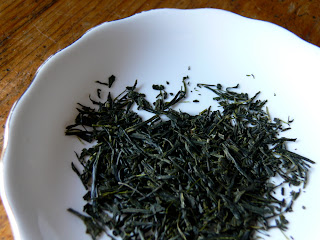
Sometimes I brew a smaller amount of leaf with low-temperature water, for about 2 minutes at a time (2-3 infusions), sometimes with lots of leaf for very short infusions (30 secs or so) in boiling water. Either way it is delicious. There are unique flavours that I haven't come across in a Japanese sencha. The taste profile is similar - the roasty, savoury taste for example - but there are also at times fruity notes, even floral ones, and sometimes an extremely distinct smell & taste that I can only describe as 'fresh dairy cream'. In some ways this tea makes me think more of an oolong than a sencha. I guess this is the effect of terroir at work.
The Alpine Tea Co teas are very reasonably priced too, and I am thinking that at $50-$65 a kilo a substantial purchase might not go amiss... especially at the rate I have been drinking sencha lately.
Interestingly, the company states on their website that
*I expect (though this is speculation on my part) that this production decision was at least partly influenced by the fact that sencha processing is almost entirely mechanised, from harvest to finish - given the high cost of labour in Australia, I imagine that a hand-plucked and processed tea would be beyond exorbitant in price.
I came across the company at the Collingwood Children's Farm farmers' market a few months ago and purchased some of their first (spring) harvest tea. I haven't tried the regular green tea yet, but I have been greatly enjoying the first harvest one (in fact am nearly out of it).

Sometimes I brew a smaller amount of leaf with low-temperature water, for about 2 minutes at a time (2-3 infusions), sometimes with lots of leaf for very short infusions (30 secs or so) in boiling water. Either way it is delicious. There are unique flavours that I haven't come across in a Japanese sencha. The taste profile is similar - the roasty, savoury taste for example - but there are also at times fruity notes, even floral ones, and sometimes an extremely distinct smell & taste that I can only describe as 'fresh dairy cream'. In some ways this tea makes me think more of an oolong than a sencha. I guess this is the effect of terroir at work.
The Alpine Tea Co teas are very reasonably priced too, and I am thinking that at $50-$65 a kilo a substantial purchase might not go amiss... especially at the rate I have been drinking sencha lately.
Interestingly, the company states on their website that
to ensure no direct comparison to Japanese Sencha (ours is not as strong), we prefer to call it Australian Green Tea.What do you think about that? I know that green tea grown in China and processed as for sencha is sold labelled as such - I believe that this is because the Japanese tea industry alone simply can't meet the full market demand for sencha. I think that so long as it is also labelled with its country of origin and not purported to be Japanese that there is no harm in calling it 'sencha' as well, or 'sencha-style' - and that this even opens up the opportunity for people to celebrate more diverse flavours and taste profiles.
*I expect (though this is speculation on my part) that this production decision was at least partly influenced by the fact that sencha processing is almost entirely mechanised, from harvest to finish - given the high cost of labour in Australia, I imagine that a hand-plucked and processed tea would be beyond exorbitant in price.
Sunday, 13 February 2011
Sustainable, organic, fair trade tea
I am quite the groupie of Nigel Melican of Teacraft Ltd - his knowledge and experience in the industry is vast and I am always interested in what he has to say. So, you can imagine how rapt I was to discover that Cinnabar of Gongfu Girl had interviewed Nigel at last year's World Tea Expo and shared the interview on Cha Dao.
If you care about issues of sustainability, organic farming and fair trade - in relation to tea in particular of course, but I think there is much in this interview that applies to agriculture and trade in general - then you should read this. The following excerpt is one I found particularly thought provoking:
The interview is relatively lengthy, so it's been divided into three parts. Definitely worth every minute of your reading time and worth coming back to. Check it out here!
Part One
Part Two
Part Three
If you care about issues of sustainability, organic farming and fair trade - in relation to tea in particular of course, but I think there is much in this interview that applies to agriculture and trade in general - then you should read this. The following excerpt is one I found particularly thought provoking:
NM: I'll give you an example of the dilemma that you might get into. I was working with a new tea grower in Hawaii -- not one of the small guys that we've seen at the Expo, but someone who wanted to do it on a hundred-acre scale, 200-acre scale. He wanted to be organic, said the production must be organic. He was a berry farmer on the mainland, and he always had an organic farm, and he wanted to have an organic tea farm. So we started off and sourced his tea and his raw materials from Africa and got it planted, and his soil was not acid enough, which is unusual for Hawaii, but this was an old sugar-cane plantation and they'd put down a lot of chalk, to benefit the sugar cane. This was 20 years ago, but it was still there. The normal way that you'd acidify soil for tea is to put sulfur on it. Sulfur is recognized by the organic people; they're happy with it. So he goes off to his supplier and when he sees the sulfur that he's offered, he says, "where does it come from?" and they say it's a by-product of the petrochemical industry, and he throws his hands up in horror! So we look and see what else we can get. It's possible to get sulfur which is rock sulfur, mined sulfur. The dilemma is, would you rape the countryside with big holes, ripping out rock sulfur, or would you use a by-product of the petrochemical industry that has to go somewhere, and is at least greening the petrochemical industry at least a little bit?
C: Why would the organic regulations say that you couldn't use petro-chemical by-products?
NM: the regulations don't say that you shouldn't, but they would prefer that you use the natural sulfur.
C: "Organic" meaning that you take it from the earth regardless of consequences? That makes no sense.
NM: No it doesn't make a lot of sense. That's why I say that sustainability and organic should be done with some degree of realism.
The interview is relatively lengthy, so it's been divided into three parts. Definitely worth every minute of your reading time and worth coming back to. Check it out here!
Part One
Part Two
Part Three
Friday, 8 October 2010
Sencha Wazuka
I could rave about this tea for hours. So I will try and keep this short and sweet (because I anticipate that Pippin will wake up any moment and frustrate my blogging ambitions for the day).
The dry leaves, which are longer, darker and less broken looking than most sencha I've had previously, smell like strawberries and cream... and toast... and these flavours carry over into the brew as well. There's some bitterness, which is enjoyable; the second and third infusions break out into a multitude of herbaceous, even camphoraceous flavours. Lavender? Pine? The leaves look rather like pine needles, as well.
This is like no sencha I have ever had before and it has opened my eyes to a whole new realm of quality. It came to me as part of the Tea Geek certification course (it's available for purchase on the Tea Geek website as well, which is where the image below is from). I may cry when I have worked my way through the rest of the sample - I think I have enough for another 2 cuppings - and then I will probably buy some more.

The dry leaves, which are longer, darker and less broken looking than most sencha I've had previously, smell like strawberries and cream... and toast... and these flavours carry over into the brew as well. There's some bitterness, which is enjoyable; the second and third infusions break out into a multitude of herbaceous, even camphoraceous flavours. Lavender? Pine? The leaves look rather like pine needles, as well.
This is like no sencha I have ever had before and it has opened my eyes to a whole new realm of quality. It came to me as part of the Tea Geek certification course (it's available for purchase on the Tea Geek website as well, which is where the image below is from). I may cry when I have worked my way through the rest of the sample - I think I have enough for another 2 cuppings - and then I will probably buy some more.
Thursday, 9 September 2010
Tea Stuff Roundup - Assam, & Mind Your Health Claims
I came across a link to this interesting article about the increase in the number of small farmers producing tea in Assam, India. The farmers grow the leaves and then sell them to larger companies to be turned into made tea. This can provide a significant and steady source of income for the farmers, which is great, although there may be some concerns about quality. However, since better leaf fetches higher prices at auction, i presume there's a strong incentive for the farmers to improve where they can.
Also spotted via Twitter, my main (only?) connection to the external world since I never pay any attention to current affairs, this article about Lipton in the US getting warned off by the FDA for making tea-related health claims. It is simultaneously funny and depressing to see companies claiming that their highly processed, sugar-filled, RTD teas are 'good for you' - come on, it's non-fizzy soft drink, people!
Plus it appears that the antioxidants in tea degrade over time, so fresh is going to be better than bottled - but we knew that anyway!
Finally, I boggled when I read this here:
To be honest, I think that anyone who was drinking that much (14 LITRES? How could you manage it?) of anything might end up just a little bit potassium deficient...
Also spotted via Twitter, my main (only?) connection to the external world since I never pay any attention to current affairs, this article about Lipton in the US getting warned off by the FDA for making tea-related health claims. It is simultaneously funny and depressing to see companies claiming that their highly processed, sugar-filled, RTD teas are 'good for you' - come on, it's non-fizzy soft drink, people!
Plus it appears that the antioxidants in tea degrade over time, so fresh is going to be better than bottled - but we knew that anyway!
Finally, I boggled when I read this here:
Tea is generally considered to be safe, even in large amounts. However, two cases of hypokalemia (abnormally low serum potassium levels) in the elderly have been attributed to excessive consumption of black and oolong tea (3-14 liters/day).
To be honest, I think that anyone who was drinking that much (14 LITRES? How could you manage it?) of anything might end up just a little bit potassium deficient...
Tuesday, 31 August 2010
Green Tea from Laos
My sister sent me a few packets of tea from her trip through Southeast Asia. This is my favourite so far (although I haven't tried all of them yet!) - a green tea from Laos. It had such pretty packaging, handmade, handpainted paper by the looks of it:

The tea inside is coarsely plucked, with quite a bit of stem, and seems to contain some jasmine blossoms as well. It certainly smells of jasmine. Most of the leaves are a medium olive-green, although some are darker.

The jasmine scent carries through to the flavour which is creamy, rich and thick, and surprisingly sweet. It's a very robust tea and stands up well to two long-ish (three minutes each) infusions, and you could probably do a third as well. Thanks little sis!

(love the smiley faces on the little printed label)

The jasmine scent carries through to the flavour which is creamy, rich and thick, and surprisingly sweet. It's a very robust tea and stands up well to two long-ish (three minutes each) infusions, and you could probably do a third as well. Thanks little sis!
Sunday, 15 August 2010
Morning Flower Tea
I was lucky enough to win some of this lovely tea from Samantha at Tea and Ink: Morning Flower Green Tea from The Tea Centre.

It's very pretty to look at, with the colourful petals scattered amongst the green leaves. I've been drinking quite a lot of it since it arrived (I kind of overdosed on awesome Darjeeling black teas from Thunderbolt Teas in the last couple of weeks - too much of a good thing, etc - so am going for greens for the next couple of days at least!) and enjoying it greatly. It's a very pleasant change of pace for me.
The website doesn't really describe the flavours of this tea at all, just labels it as 'Green tea with sunflower blossoms, cornflowers & rose buds', but there is a peachy-apricotty flavour to it; it's fruity and floral without being cloying at all. I've been doing two infusions at a time (about 2-3 minutes each) and they both have plenty of taste. I bet this would be a terrific iced tea for the hot weather as well! If we ever get any. I am totally freezing today.
Thank you so much for this tea Samantha, I have really appreciated it! Samantha was also kind enough to give me a 'Versatile Blogger' award, and I am getting around to passing it on... I might have to do it in two batches, though, being rather short of time!
It's very pretty to look at, with the colourful petals scattered amongst the green leaves. I've been drinking quite a lot of it since it arrived (I kind of overdosed on awesome Darjeeling black teas from Thunderbolt Teas in the last couple of weeks - too much of a good thing, etc - so am going for greens for the next couple of days at least!) and enjoying it greatly. It's a very pleasant change of pace for me.
The website doesn't really describe the flavours of this tea at all, just labels it as 'Green tea with sunflower blossoms, cornflowers & rose buds', but there is a peachy-apricotty flavour to it; it's fruity and floral without being cloying at all. I've been doing two infusions at a time (about 2-3 minutes each) and they both have plenty of taste. I bet this would be a terrific iced tea for the hot weather as well! If we ever get any. I am totally freezing today.
Thank you so much for this tea Samantha, I have really appreciated it! Samantha was also kind enough to give me a 'Versatile Blogger' award, and I am getting around to passing it on... I might have to do it in two batches, though, being rather short of time!
Tuesday, 20 July 2010
Tuesday's Tea of the Week: Mint Delight
Another minty treat for you this week, Mint Delight is inspired by Moroccan mint tea. The combination of spearmint, peppermint and green tea (all organic) is extremely refreshing, if not 100% traditional.

Nonetheless, Mint Delight is a delicious and convenient pick me up to have at your desk if tall silver teapots, rock sugar and bunches of fresh mint are not readily available (they weren't in my office. Of course, perhaps some things could, and should, be changed).
Mint Delight is another one of my blends that is equally good hot or iced, with or without added sweetening. So versatile! I'm sure you need some... I certainly do!
Next week: Vanilla Rooibos

Nonetheless, Mint Delight is a delicious and convenient pick me up to have at your desk if tall silver teapots, rock sugar and bunches of fresh mint are not readily available (they weren't in my office. Of course, perhaps some things could, and should, be changed).
Mint Delight is another one of my blends that is equally good hot or iced, with or without added sweetening. So versatile! I'm sure you need some... I certainly do!
Next week: Vanilla Rooibos
Tuesday, 15 June 2010
Tuesday's Tea of the Week: Rainforest (and a Giveaway!)
Today I'm inviting you to take a deep breath and step into a beautiful Australian Rainforest. That really is just what this tea smells like. I was totally inspired one day when I received a herb delivery from my supplier... I had ordered a small packet of eucalyptus along with all the other things, just to see what I could do with it, and when I opened the box and smelt it alongside the big bag of lavender that was also in there, I just knew I needed to try making it into a blend.
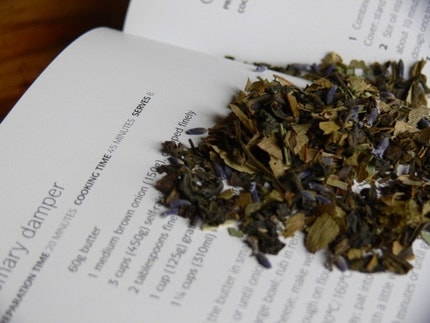
And guess what: combined with green tea and some lemon myrtle, it worked. (I was on a big 'lemon myrtle is the best stuff ever' kick that week too.) The incredible freshness of this tea will blow you away. It sounds like a really unusual combination, and I guess it is, but you definitely should try it. It's aromatic, and sweet, and lemony, and just the remedy for city living if you can't schedule yourself a tree change.
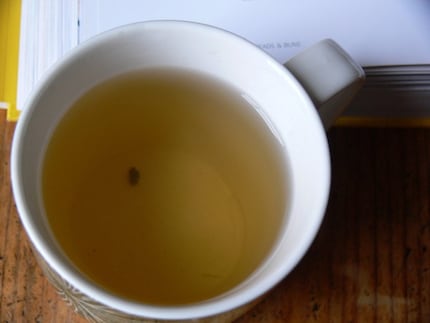
If you live in Australia and would like to try Rainforest, leave a comment on this post - one entry per person only please - because next Monday I will randomly select two winners to receive a free sample size (enough for five cups of tea). Don't forget to leave me a way to contact you if you win! Good luck!
Tuesday, 25 May 2010
Tuesday's Tea of the Week: Rosie

As a side note, I really like the green tea that I use as a base for my green tea blends - it's an interesting mixture of different shades of green and is mainly comprised of large-ish leaves. Its taste is a tiny bit astringent at first, with a touch of mintiness (which I believe can be characteristic of Sri Lankan teas) but it mellows into a beautiful lingering sweetness. Very easy drinking, and it reinfuses well once or twice too.
Next week: Paintbox.
Wednesday, 24 February 2010
Wishlist Wednesday - Dreaming of Green
Here's a few luscious green teas I'd like to add to my tea cupboard...
 Organic Misty Green 'A' from SanTion House of Tea... I tried a sample size of this recently and it's delicious. Very savoury and vegetal though... not for the faint-hearted.

Uji Matcha Kiku Mukashi, from O-Cha... sounds like it would be a pretty good beginner's matcha.

And Organic Kabusecha, also fom O-Cha... partially shade-grown so it has characteristics of sencha and of gyokuro apparently, which sounds interesting!
Organic Misty Green 'A' from SanTion House of Tea... I tried a sample size of this recently and it's delicious. Very savoury and vegetal though... not for the faint-hearted.Uji Matcha Kiku Mukashi, from O-Cha... sounds like it would be a pretty good beginner's matcha.
And Organic Kabusecha, also fom O-Cha... partially shade-grown so it has characteristics of sencha and of gyokuro apparently, which sounds interesting!
Thursday, 15 October 2009
Experimenting
It is downright freezing in my house today despite being the middle of October , so I am happy to be experimenting with some new tea blends (using as a base the Sri Lankan green that I wrote about here) and drinking lots of hot tea.
 This photo was taken in Daylesford about 6 weeks ago, but the weather's not much different today!
As I have discovered over the last six months or so it is not actually that simple to create green tea blends using only natural herbs and spices (as opposed to flavourings/essences, whether natural or artificial in origin). This is primarily because of the different brewing temperatures and times of the different components: green teas generally yield the best results from short steeps at a lower temperature (around 80 Celsius), but herbs and spices need higher temperatures and longer steeping times to release their flavours properly. So it's not as easy to create a really lovely tasting green tea blend as it is to create a black one where the temperature and time factors are more similar.
My first trial batch this morning is a Moroccan mint-type blend (using dried herbs obviously, instead of fresh ones as I did the other day) of green tea, peppermint and spearmint. In the interest of scientific curiosity (and not freezing to death) I decided to try brewing two separate pots, one with water straight off the boil (yes, I know... I shuddered merely thinking about it but I did it anyway; that's just how intrepid I am) and another with water cooled for 3 minutes or so to about 75-80 Celsius. Unfortunately I don't have two teapots of exactly the same type and dimensions, but I did my best to keep the proportions of tea and water the same - 2 rounded metric teaspoons to about 400ml water, steeped for about 2 minutes.
Both teas were quite tasty (I think at least partly owing to the fact that the mints are powerfully flavoured in their own right and so probably relatively well-suited to brewing at different temperatures) but I preferred the one brewed at the cooler temperature. I'm hoping this isn't just my innate prejudice regarding the 'proper' way to brew tea; I really did try to keep an open mind and was even sort of hoping that the boiling water one might turn out better. But it had a strange kind of metallic taste to it that wasn't present in the other... not very pleasant. So once I get this blend up in my shop I will definitely be recommending that it be brewed with cooler water.
 This photo was taken in Daylesford about 6 weeks ago, but the weather's not much different today!
As I have discovered over the last six months or so it is not actually that simple to create green tea blends using only natural herbs and spices (as opposed to flavourings/essences, whether natural or artificial in origin). This is primarily because of the different brewing temperatures and times of the different components: green teas generally yield the best results from short steeps at a lower temperature (around 80 Celsius), but herbs and spices need higher temperatures and longer steeping times to release their flavours properly. So it's not as easy to create a really lovely tasting green tea blend as it is to create a black one where the temperature and time factors are more similar.
My first trial batch this morning is a Moroccan mint-type blend (using dried herbs obviously, instead of fresh ones as I did the other day) of green tea, peppermint and spearmint. In the interest of scientific curiosity (and not freezing to death) I decided to try brewing two separate pots, one with water straight off the boil (yes, I know... I shuddered merely thinking about it but I did it anyway; that's just how intrepid I am) and another with water cooled for 3 minutes or so to about 75-80 Celsius. Unfortunately I don't have two teapots of exactly the same type and dimensions, but I did my best to keep the proportions of tea and water the same - 2 rounded metric teaspoons to about 400ml water, steeped for about 2 minutes.
Both teas were quite tasty (I think at least partly owing to the fact that the mints are powerfully flavoured in their own right and so probably relatively well-suited to brewing at different temperatures) but I preferred the one brewed at the cooler temperature. I'm hoping this isn't just my innate prejudice regarding the 'proper' way to brew tea; I really did try to keep an open mind and was even sort of hoping that the boiling water one might turn out better. But it had a strange kind of metallic taste to it that wasn't present in the other... not very pleasant. So once I get this blend up in my shop I will definitely be recommending that it be brewed with cooler water.
Monday, 12 October 2009
Moroccan Mint
A lovely, sunny, warm weekend in Melbourne has just passed, and today it has continued mostly warm and sunny (and also exceptionally windy; it's now clouded over and I think there will be storms on the way). Having a bunch of fresh mint in the fridge, I decided to brew up some Moroccan Mint tea... Here's the recipe I made today:
Just under a cup of fresh mint leaves, loosely packed
1.5 teaspoons gunpowder green tea (I used Temple of Heaven brand from one of the local Asian grocers)
2 teaspoons honey
2 cups boiling water
Ice cubes (optional)
Put the mint leaves into a 2-cup teapot and steep in the boiling water for 3 minutes. Add the gunpowder green tea and steep for a further 2 minutes. Have the honey in a heatproof jug and after the tea has steeped, strain it into the jug and stir well to dissolve the honey. You can drink this hot as it is, or if you would like something a little cooler, add about a half a cup of ice cubes and stir til dissolved (this brings it down to about room temperature), or otherwise let it cool and then refrigerate for later.
Enjoy!
Just under a cup of fresh mint leaves, loosely packed
1.5 teaspoons gunpowder green tea (I used Temple of Heaven brand from one of the local Asian grocers)
2 teaspoons honey
2 cups boiling water
Ice cubes (optional)
Put the mint leaves into a 2-cup teapot and steep in the boiling water for 3 minutes. Add the gunpowder green tea and steep for a further 2 minutes. Have the honey in a heatproof jug and after the tea has steeped, strain it into the jug and stir well to dissolve the honey. You can drink this hot as it is, or if you would like something a little cooler, add about a half a cup of ice cubes and stir til dissolved (this brings it down to about room temperature), or otherwise let it cool and then refrigerate for later.
Enjoy!
Thursday, 26 February 2009
Green tea, out and about
Not much time to post this week; have been feeling quite under the weather with the virus that seems to be doing the rounds of my office and have had a couple of days home on the couch feeling sorry for myself. Such is life. It did give me the opportunity to put my Yixing teapot to use for the first time, though – and in other exciting news, the two sample packs of oolong tea (10 different kinds in total!) arrived with unexpected swiftness from Tea From Taiwan (only a week after I placed my order, now that’s great service!). I haven’t had the chance to try any of these so far but I hope to on the weekend after our flying trip to Melbourne.
Anyway, I thought I’d post briefly about a couple of pleasant tea experiences which I’ve had when out to dinner over the last few weeks.
The first was at a brilliant little Middle-Eastern café called Mint in Surry Hills (more or less), Sydney, where my friend M and I had a light dinner after our tea-tasting extravaganza at Zensation. As if I hadn’t had enough tea already (which, clearly, I hadn’t), to my friend’s astonishment I ordered a pot of Moroccan mint tea. To my delight I saw the guy behind the bar literally stuffing a huge – really - handful of fresh mint into a white Beehouse teapot; green tea (not sure what sort) was placed to the infuser, and from the sweetness I guess the sugar had been added along with the mint before the water was put in. It was fresh, minty, sweet but not overly so, and perfectly brewed. I loved it!
Having read a few weeks ago about a spiced green tea called kahva on the TeaSpot blog, I was intrigued to find it listed amongst the hot drinks at the little local Indian restaurant just across the road from our house, when my husband and I ate there one Friday night. I was cranky (had just discovered that our gas had been disconnected for no reason), tired and feeling like I was coming down with a cold, so I decided to order some kahva to warm and cheer myself up.
It arrived in one of those strikingly unattractive little metal teapots that are so common in restaurants, accompanied by a couple of lemon wedges, some sugar, and a tiny espresso-sized cup. The restaurant not being very well lit, the only things that I could see in the pot were some green tea leaves (again, not sure what kind) and some whole star anise, which was responsible for the beautiful sweet aroma rising from the pot. The tea was delicious; not bitter or overbrewed at all, despite the fact that I could only pour out one small cup at a time and the remainder was left to continue to steep. The flavour of the star anise added a lovely liquorice sweetness.
My faith in the possibility of ordering decent green tea while out and about - which was seriously crushed a couple of years ago by a hideous café experience involving some gunpowder green tea, ruined with boiling water and left to steep until it was undrinkable; honestly, it would have stripped paint – is gradually being restored. This can only be a good thing.
Anyway, I thought I’d post briefly about a couple of pleasant tea experiences which I’ve had when out to dinner over the last few weeks.
The first was at a brilliant little Middle-Eastern café called Mint in Surry Hills (more or less), Sydney, where my friend M and I had a light dinner after our tea-tasting extravaganza at Zensation. As if I hadn’t had enough tea already (which, clearly, I hadn’t), to my friend’s astonishment I ordered a pot of Moroccan mint tea. To my delight I saw the guy behind the bar literally stuffing a huge – really - handful of fresh mint into a white Beehouse teapot; green tea (not sure what sort) was placed to the infuser, and from the sweetness I guess the sugar had been added along with the mint before the water was put in. It was fresh, minty, sweet but not overly so, and perfectly brewed. I loved it!
Having read a few weeks ago about a spiced green tea called kahva on the TeaSpot blog, I was intrigued to find it listed amongst the hot drinks at the little local Indian restaurant just across the road from our house, when my husband and I ate there one Friday night. I was cranky (had just discovered that our gas had been disconnected for no reason), tired and feeling like I was coming down with a cold, so I decided to order some kahva to warm and cheer myself up.
It arrived in one of those strikingly unattractive little metal teapots that are so common in restaurants, accompanied by a couple of lemon wedges, some sugar, and a tiny espresso-sized cup. The restaurant not being very well lit, the only things that I could see in the pot were some green tea leaves (again, not sure what kind) and some whole star anise, which was responsible for the beautiful sweet aroma rising from the pot. The tea was delicious; not bitter or overbrewed at all, despite the fact that I could only pour out one small cup at a time and the remainder was left to continue to steep. The flavour of the star anise added a lovely liquorice sweetness.
My faith in the possibility of ordering decent green tea while out and about - which was seriously crushed a couple of years ago by a hideous café experience involving some gunpowder green tea, ruined with boiling water and left to steep until it was undrinkable; honestly, it would have stripped paint – is gradually being restored. This can only be a good thing.
Tuesday, 25 November 2008
Another couple of random tea notes...
Oh dear – another couple of weeks have crept by with no blog update… things have been so frantically busy both inside and outside of work that it’s been difficult to find the time to sit down and write calmly… in fact a couple of days have gone by when I have not even had the time to make a pot of tea at work! Dark times indeed. Possibly the Apocalypse approaches.
I discovered last night that Teas.com.au has gone live with a new, updated version of their website – check it out here. It looks lovely and I just adore the little row of teapots at the top… hover your mouse over them and the lid tilts up and bubbles move up through the pot! To celebrate the release of the new site they are offering some specials on orders for the next little while… I’m feeling very tempted to get one of their Wulong (oolong) samplers and some Lung Ching Dragonswell also… but I’ll do another stocktake of my tea cupboard first. I really am trying not to have too many open packets of tea on hand at one time…
I have had some marvellous teas from Teas.com.au, actually – their bouquet teas are lovely, particularly the ‘Spring blossom’, which has white tea, lily and osmanthus – it’s sweet and has a taste rather like cinnamon, though there’s no cinnamon in it. I also really love some of their herbal blends – the ‘Cherish’ blend is particularly tasty and beautiful to look at too, with the rose petals and rooibos and chamomile.
I was also excited to discover last night, when I opened up Gmail, that you can now set a ‘theme’ to customise the background and colours of your email inbox, etc. Fantastic – even more so when I found out that one of the themes was ‘teahouse’… a little Japanesey tea house set in a garden of blossom trees. Too cute! Needless to say that was the one that I chose…
What’s in my cup today? So far this morning I have had some rooibos tea (at breakfast time with my lovely husband) and a pot of genmaicha (Japanese green tea with roasted rice). Who knows what else the day will hold?
I discovered last night that Teas.com.au has gone live with a new, updated version of their website – check it out here. It looks lovely and I just adore the little row of teapots at the top… hover your mouse over them and the lid tilts up and bubbles move up through the pot! To celebrate the release of the new site they are offering some specials on orders for the next little while… I’m feeling very tempted to get one of their Wulong (oolong) samplers and some Lung Ching Dragonswell also… but I’ll do another stocktake of my tea cupboard first. I really am trying not to have too many open packets of tea on hand at one time…
I have had some marvellous teas from Teas.com.au, actually – their bouquet teas are lovely, particularly the ‘Spring blossom’, which has white tea, lily and osmanthus – it’s sweet and has a taste rather like cinnamon, though there’s no cinnamon in it. I also really love some of their herbal blends – the ‘Cherish’ blend is particularly tasty and beautiful to look at too, with the rose petals and rooibos and chamomile.
I was also excited to discover last night, when I opened up Gmail, that you can now set a ‘theme’ to customise the background and colours of your email inbox, etc. Fantastic – even more so when I found out that one of the themes was ‘teahouse’… a little Japanesey tea house set in a garden of blossom trees. Too cute! Needless to say that was the one that I chose…
What’s in my cup today? So far this morning I have had some rooibos tea (at breakfast time with my lovely husband) and a pot of genmaicha (Japanese green tea with roasted rice). Who knows what else the day will hold?
Wednesday, 5 November 2008
Iced tea!
The weather is finally warming up (yes, even in Canberra, hallelujah) and I am finding that hot tea is not always, well, my cup of tea, at the moment, particularly not after I have had to walk home after work on a sunny evening, as happens quite often lately because my husband is working unreasonable hours for the PM (boo!).
So my thoughts have been turning to iced tea. I am lucky enough to have a couple of Bodum iced tea pitchers (birthday presents from kindly friends who chose to feed my addiction rather than thwart it) which make making iced tea much easier than it would otherwise be. These are tall plastic pitchers with a long filter that fits in against one side; you put the tea leaves into this and then fill with water, then it’s simple to remove the filter and the leaves once the brewing time is over. For a picture and another rave review, have a look here.
Because it was sunny and shiny on the northern hemisphere side of the world in mid-July, while I was freezing my toes off in below zero temperatures down here, most of the (American) tea blogs that I read were talking about iced tea at a time when I couldn’t think of anything less appealing, except perhaps walking barefoot through the snow selling matches. I did, however, take note of some of the recommendations made on some of these sites and stored them away in my head for future reference.
One of these recommendations was to brew your iced tea with cold water. Now most of the instructions that I’ve seen for making iced tea (e.g. those that came with my pitchers, for example) say that you brew it up with twice the tea leaves (because things taste less strong when they’re cold) and half the hot water that you would normally use, and then add cold water and ice to chill it once it’s finished steeping. This is all very well if you’re organised enough to have ice in your freezer (regrettably, I’m usually not, as we don’t use much of it). So the cold brewing method was a revelation.
I have tried it a few times recently with green and black teas and I have to say it works exceptionally well. It takes a bit longer (you need to leave the tea to steep in the fridge for about 8 hours or overnight – I find this less difficult to organise than having ice in the freezer, surprisingly), but the result is fantastic. One of the aesthetic benefits, if you’re fussed about such things, which I’m not particularly, but I may as well mention it, is that the resulting tea is crystal clear; making tea with hot water extracts higher amounts of polyphenols, and subsequent chilling causes these to precipitate, making the brew look cloudy. However, the slower steeping time at cold temperatures means this doesn’t happen when you cold-brew the tea. Another plus (probably related) – there is a much smaller risk that your tea (particularly green teas) will end up astringent and unpleasant – I always find it a bit harder to judge water temperature and volume when I’m making larger quantities of tea and sometimes it doesn’t come out quite right. There’s a bit more leeway with iced herbal teas, so I think I will probably continue to brew those the hot way, though.
I have had great success with brewing my honey-flavoured sencha from Tea Leaves this way (don’t particularly like it hot, but it’s more palatable cold and with a squeeze of lemon) and also the Assam Dimakusi BOP which I have discussed here – this makes a particularly nice smooth iced tea. I am looking forward to trying some iced Earl Grey as well, perhaps with orange slices in it…
So my thoughts have been turning to iced tea. I am lucky enough to have a couple of Bodum iced tea pitchers (birthday presents from kindly friends who chose to feed my addiction rather than thwart it) which make making iced tea much easier than it would otherwise be. These are tall plastic pitchers with a long filter that fits in against one side; you put the tea leaves into this and then fill with water, then it’s simple to remove the filter and the leaves once the brewing time is over. For a picture and another rave review, have a look here.
Because it was sunny and shiny on the northern hemisphere side of the world in mid-July, while I was freezing my toes off in below zero temperatures down here, most of the (American) tea blogs that I read were talking about iced tea at a time when I couldn’t think of anything less appealing, except perhaps walking barefoot through the snow selling matches. I did, however, take note of some of the recommendations made on some of these sites and stored them away in my head for future reference.
One of these recommendations was to brew your iced tea with cold water. Now most of the instructions that I’ve seen for making iced tea (e.g. those that came with my pitchers, for example) say that you brew it up with twice the tea leaves (because things taste less strong when they’re cold) and half the hot water that you would normally use, and then add cold water and ice to chill it once it’s finished steeping. This is all very well if you’re organised enough to have ice in your freezer (regrettably, I’m usually not, as we don’t use much of it). So the cold brewing method was a revelation.
I have tried it a few times recently with green and black teas and I have to say it works exceptionally well. It takes a bit longer (you need to leave the tea to steep in the fridge for about 8 hours or overnight – I find this less difficult to organise than having ice in the freezer, surprisingly), but the result is fantastic. One of the aesthetic benefits, if you’re fussed about such things, which I’m not particularly, but I may as well mention it, is that the resulting tea is crystal clear; making tea with hot water extracts higher amounts of polyphenols, and subsequent chilling causes these to precipitate, making the brew look cloudy. However, the slower steeping time at cold temperatures means this doesn’t happen when you cold-brew the tea. Another plus (probably related) – there is a much smaller risk that your tea (particularly green teas) will end up astringent and unpleasant – I always find it a bit harder to judge water temperature and volume when I’m making larger quantities of tea and sometimes it doesn’t come out quite right. There’s a bit more leeway with iced herbal teas, so I think I will probably continue to brew those the hot way, though.
I have had great success with brewing my honey-flavoured sencha from Tea Leaves this way (don’t particularly like it hot, but it’s more palatable cold and with a squeeze of lemon) and also the Assam Dimakusi BOP which I have discussed here – this makes a particularly nice smooth iced tea. I am looking forward to trying some iced Earl Grey as well, perhaps with orange slices in it…
Sunday, 8 June 2008
Gyokuro II and a Tea Recipe
Good morning all
Apologies for being so absent over the last week or so - what with moving house and having a very busy week at work I just have not had time for tea blogging, and barely time for tea, indeed (though I've still managed to fit in quite a bit). Right now it's a chilly early Sunday morning in (relatively) sunny Canberra. I thought I would get up early and make some more gyokuro tea, but using the method I described somewhere below - i.e. a much higher proportion of leaf to water.
Well, I did, and I'm not entirely sure if I did something wrong (e.g. the water was too hot, I steeped it for a bit too long), but the method produced only a tiny amount of tea (most of the water got sucked up by the tea leaves, which now closely resemble lawn clippings) which was so astringent and strong I couldn't drink it - a very sad thing.
I added more, slightly cooler water, in a larger quantity, and poured myself another cup after only about 30-45 seconds, and this is better but still largely (to me, anyway) undrinkable. The aftertaste is very pleasant - green and relatively sweet - but the tea itself is just so grassy and astringent that I can barely get it down. It's like drinking your lawn. Anyway, I'm rather disappointed - I was really looking forward to it this morning, but I just can't drink gyokuro like this. So even if it is inauthentic, I will go back to doing it the old regular 'two teaspoons to a pot' method... I feel like such a philistine...
I won't throw out the remaining liquor though, I'll save it to use on my face - I feel like making a mask or something this morning, so I'll use the tea instead of just plain water... Meant to be very good for your skin, green tea, being anti-inflammatory and so on...
On to more happy news: last Sunday I made a Marmalade Tea Loaf, the recipe for which can be found here at taste.com.au. This reminds me very much of the cup-of-tea cake that my mum always used to make when I was little (although I don't think hers had marmalade in it) and as a result brought on quite a fit of homesickness and nostalgia... It's a particularly good cake, very moist and fruity, and really easy to make - you do need to soak the fruit in the tea the night before (and you don't need to wait until the tea's completely cold, either, if like me you are putting it on just before you go to bed and are too sleepy to hang about), but apart from that it's just a very quick mix. You can't taste the tea in it terribly strongly, of course, so you don't need to worry too much about using your finest tea - although I am quite interested to try making it again with some Earl Grey instead of plain black tea... And it is, of course, an extremely fine accompaniment to - guess what? A nice cup of tea...
Sunday, 11 May 2008
Gyokuro

Woke up early this morning and for once actually felt like getting out of bed (plus the cat was restless, which always helps - easier to get up than listen to him scratching the carpet, pushing things off the bedside table, and so on), so I hopped up and decided to try out my gyokuro that I bought from T2 last weekend. I've been saving it up for a nice quiet time so I have the chance to savour it properly.
Well, all I can say is, it was a revelation. The liquor was clear yellow-green, and the taste - well, I don't know the proper terminology, so I'll just try to describe it as best I can. It was a bit earthy at first, but then with an aftertaste that was clear and sweet, a little fruity even, and it left a nice cool feeling on my lips that I've never experienced before except when drinking something like peppermint. Totally sublime.
I've just googled 'gyokuro tea' to find out more about it. According to Green Tea Expert, gyokuro means 'gem of dewdrop' or 'pearl dew' (isn't that lovely - although if I am repeating misinformation I hope that any Japanese speakers out there will correct me). It is apparently one of the rarest and most expensive Japanese green teas, and the dark green colour is the result of shading the plants, leading them to develop more chlorophyll.
(I have a second photo to add but for some reason it's just not uploading. I'll try it again later...)
I will definitely be drinking more gyokuro more often, and will probably invest in a whole packet once I've worked through the little sample size that I bought... This could prove to be an expensive habit. But who am I kidding? Tea was always going to be an expensive habit for me...
Update, 13 May – I just did a bit more reading about gyokuro and it would seem that I did not brew it properly the other day when I made it (nice though it was). You need to use a lot more leaf to a small amount of water (2 tablespoons leaf to 120ml!) rather than the regular 2 teaspoons to a pot, which is the T2 recommendation. Oops! But apparently you can get several brewings out of it this way. I guess I will try it, but it looks like I will be going through it a lot more quickly than I thought. Definitely a tea to be saved for special occasions…
Sunday, 4 May 2008
Verity's Adventures in Wonderland

I headed off to T2 this morning as forecast and came home with a few things (very restrained of me, really): a new tea strainer, a box of their 'Soothe' herbal blend (one of my favourites) and an 'Exotic Stack' which includes Buddha's Tears, Gyokuro and Pai Mu Tan.
I've had Pai Mu Tan before, but hadn't tried the others and figured it was a relatively inexpensive way ($40 for the 3) of testing them out - especially given that the other option for Gyokuro was the 100g box at $48 (a bit much to shell out for a tea I wasn't sure I would like).
The shop itself was a little smaller than I'd hoped, and a bit crowded at the front - they have their big sample table, where you can smell all the different teas, very close to the entrance. This made it a little hard to get in, given that there were a number of customers browsing the shelves towards the front, so I had to squeeze to get into the actual shop. On the plus side, it is of course a Good Thing that they were relatively busy even on a Sunday morning in Canberra at 10.30.
I noted a sign saying that they are currently looking for assistant managers... *sigh*
I have just shared a pot of the Buddha's Tears with my husband - I took some photos of it while the leaves were unfurling. It is the best jasmine tea I have ever drunk - really floral and with a beautiful sweet aftertaste, a lovely golden colour too. I was surprised at how large the leaves were when they had unfurled - the balls are so small and intricate when they are rolled up. I can't imagine how tricky it must be to make these kinds of teas...
I'm going to go and see if I can get another pot out of it. There seem to be differing views on how many times you can re-infuse particular teas, and how long for - e.g. I've read that a first infusion should only be for 30 seconds, and the second and third ones can be longer. Well, I'll see what happens with the remains of the Buddha's Tears (after a first infusion of about 4 minutes)...
Subscribe to:
Posts (Atom)
LinkWithin
